Wild Life
On Patience

Have you ever felt chipmunk paws on your skin? I recommend it.
In order for this creature to trust that the human will not crush her, I must be very still for about ten minutes, my hand full of birdseed. The meditative nature of that willed stillness is therapeutic. I can feel my circulatory system slowing. Imagining the potential payoff of touching something wild, and having it touch me, helps me maintain concentration.
Everyone should touch something wild, and have it touch them. Not a wild human, mind you. Enough of that already.
I’m pretty sure Lady Chipmunk is my housemate. I strongly suspect she is raising a family in the shadows beneath the porch, from which she emerges, and to which she scampers back with impressive speed, considering her wee legs. Having her cheeks stuffed to bursting with birdseed does not slow her down at all.
She makes waiting fun. Prior to this video, LC crept within a few feet of my hand, then hustled away, ran some calculations in her rodent brain, returned, edged a few inches closer, fled, cogitated more about the risk-return ratio of contact. Eventually, she tested how my skin felt under her paws, then ran away. Then, as you can see, she finally thought screw it, I’m going in!
Judging from the many burrow entrances in the grass around our house, LC is one of many neighborhood chipmunks. She is far and away the bravest of the bunch. The smartest? Hard to say. Is it technically smarter to stay away from a large human like me? I don’t take it personally that the vast majority of local critters would not dare take advantage of my kindness, my patience. Their instinct tells them to only scrounge for sustenance when I am distant. But Lady Chipmunk is bold.
Will Lady Chipmunk’s offspring be similarly brazen? Will my offspring be similarly patient? Such unanswerable questions only burn when I’m not in the moment. My mind doesn’t bother with that stuff when I’m doing something like feeding a chipmunk by hand. Or watching them play in a ceramic bowl.
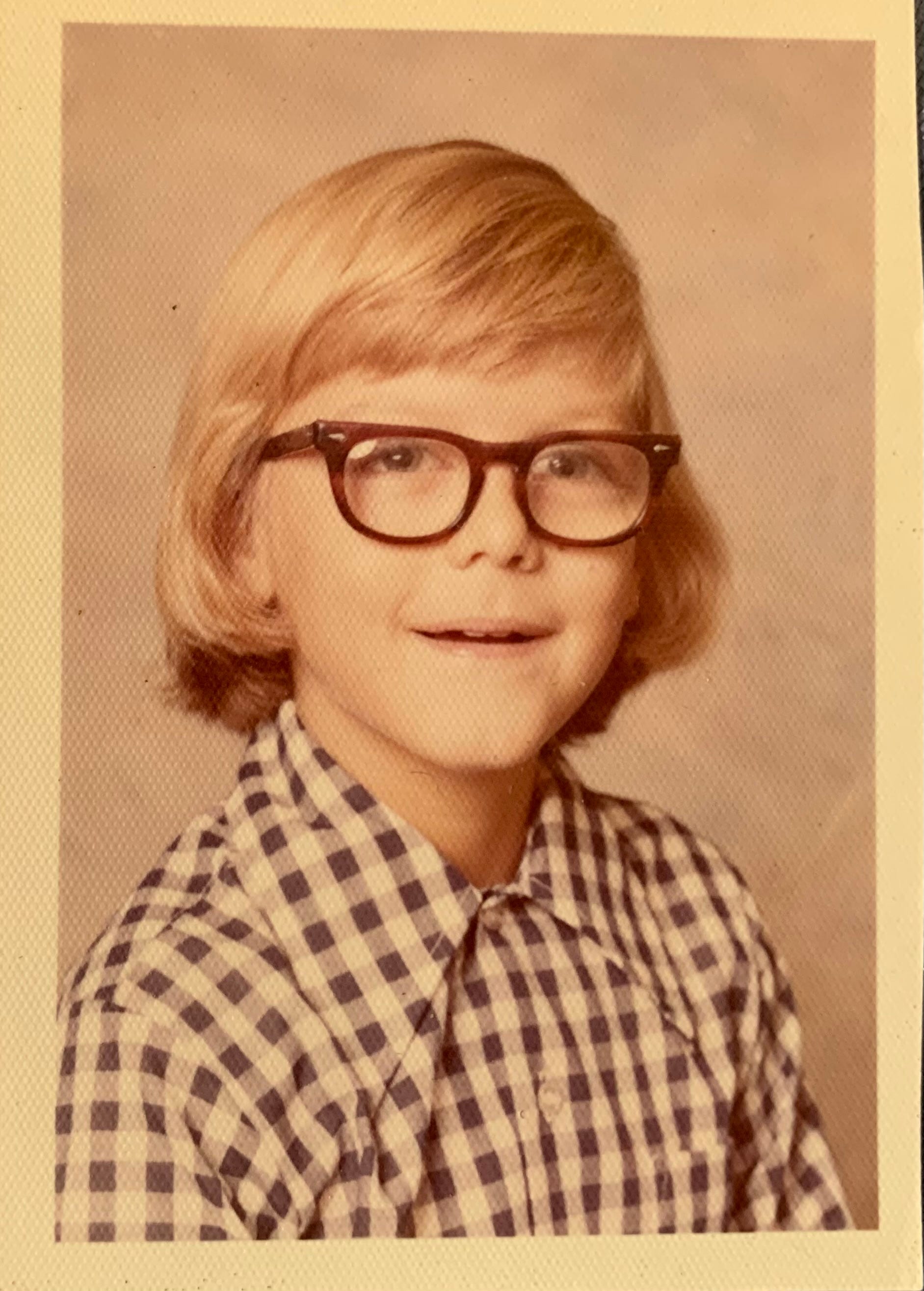
I am patient by nature. For good and for ill. One of my earliest memories is standing on the balcony of my father and stepmother’s apartment with a large ice cube in my hand, watching it melt in the blazing summer sun. I was five, and alone.
Why I was compelled to do this I cannot tell you. I can tell you it gave me pleasure, the warmth of wonder, a dim sense of deep time. The complete morphing of shimmery solid to cool liquid probably took about ten minutes, during which I stared intently at the process. I didn’t yet consciously realize those hydrogen and oxygen molecules would cycle endlessly, would, in fact, still be out there somewhere.
I’ve been meaning to repeat this activity for decades, but I haven’t gotten around to it. I know I could do it, though. The patience that allowed me to be still as the ice cube melted has shaped my life.
When I was in my mid-thirties, and adjusting to the realization that my longshot rock star dreams would not come true, I had a conversation with an accomplished music producer, a man of realized dreams. Granted, success had not been handed to him. He’d worked, and he was, and is, objectively excellent as both a producer and musician. I asked him if it was possible to be too patient.
He didn’t skip a beat. “Yes,” he said. “It is.”
“Now you tell me,” I said.
We laughed. We were watching our sons play. In those days of early parenthood, I was not bothered by unmet goals. I felt very rich indeed, like I’d hit the jackpot with a healthy, sunny child who gave me a kind of sustained joy I’d never known. On him I would lavish my gift of patience, and never feel I was overdoing it.
It’s a cliche to say you learn from your offspring, but it is also unequivocally true. Through caring for my son, I discovered I was a good teacher, and my inborn patience has a lot to do with that. I have now taught children, teens, and adults for many years, honing my innate skills. It gives me deep satisfaction. Most of the time.
Looking back, however, I sometimes feel a creeping regret that maybe I was too patient with some endeavors, some people, including myself. I recall a lot of fruitless waiting, time squandered. In the dark terrain of my mind, patience in retrospect sometimes seems like passivity, like… fear. Wrestling such notions, indulging in such narratives, I can be unkind to myself. It’s a bad habit I’m forever working to break, a shadowy quirk of the storytelling impulse.
But then comes a moment of patience rewarded, of small, trusting, powerfully curious hands, of beauty revealed through surrender, and for a sliver of time, I feel no regret at all.
Just lovely. And a timely reminder to be in the present, just when I needed it, which is pretty much always. Thanks.
I think that patience is an elusive but crucial quality. “Beauty revealed through surrender” just about says it all. When does anything actually begin or end? What “outcome” do we hope for, and why? I guess we’ll see, or we won’t. Thank you for this evocative reflection, Robert.