Mom's Missions
A Hippie Kid Remembers

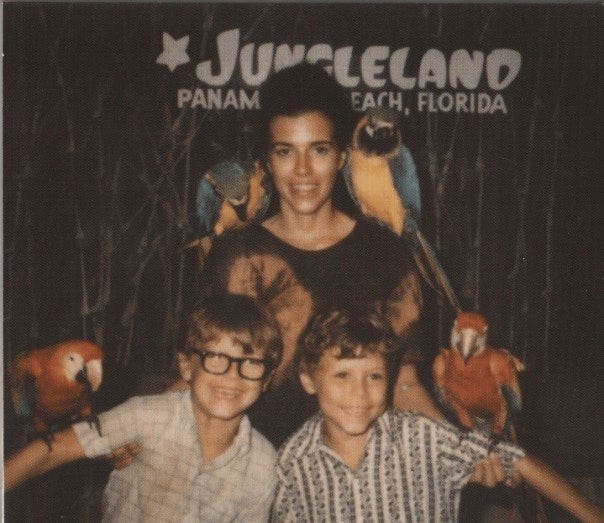
Congress passed the Civil Rights Act in 1964. I was born the following year. In the early days of my life, changes both tangible and subtle wrought by this landmark legislation – and subsequent amplifications of the Act – informed my life. The shadows of the Jim Crow South – the era of my immediate ancestors – receded, but would creep back through the years. Particularly, to my sad astonishment, the last decade. But we fight on.
In my earliest days here, my single mom, the daughter of a journalist, wrote copy for ad agencies. (The Civil Rights Act did not guarantee her equal pay for this work, incidentally.) I retain but a few recollections of this time. My memories begin in earnest when she took a job with a federally funded program called Equal Opportunity of Atlanta, or EOA. The Equal Opportunity Act was part of Lyndon Johnson’s War on Poverty, also enacted in 1964. When Nixon took office in 1969, the government kept it going, and Mom jumped on board to help poor people get off welfare, find jobs and good homes, and keep their kids off the streets by employing them.
Mom had been raised in a racist household, and carefully taught, like most of her white southern generation, to Fear the Blacks and Distrust Big Government. After bringing two kids into the world, and, most significantly, divorcing our father when I was an infant, she’d rebelled. EOA was a chance to continue kicking madly against institutional racism and put food on the table for my brother, Britt, and me.
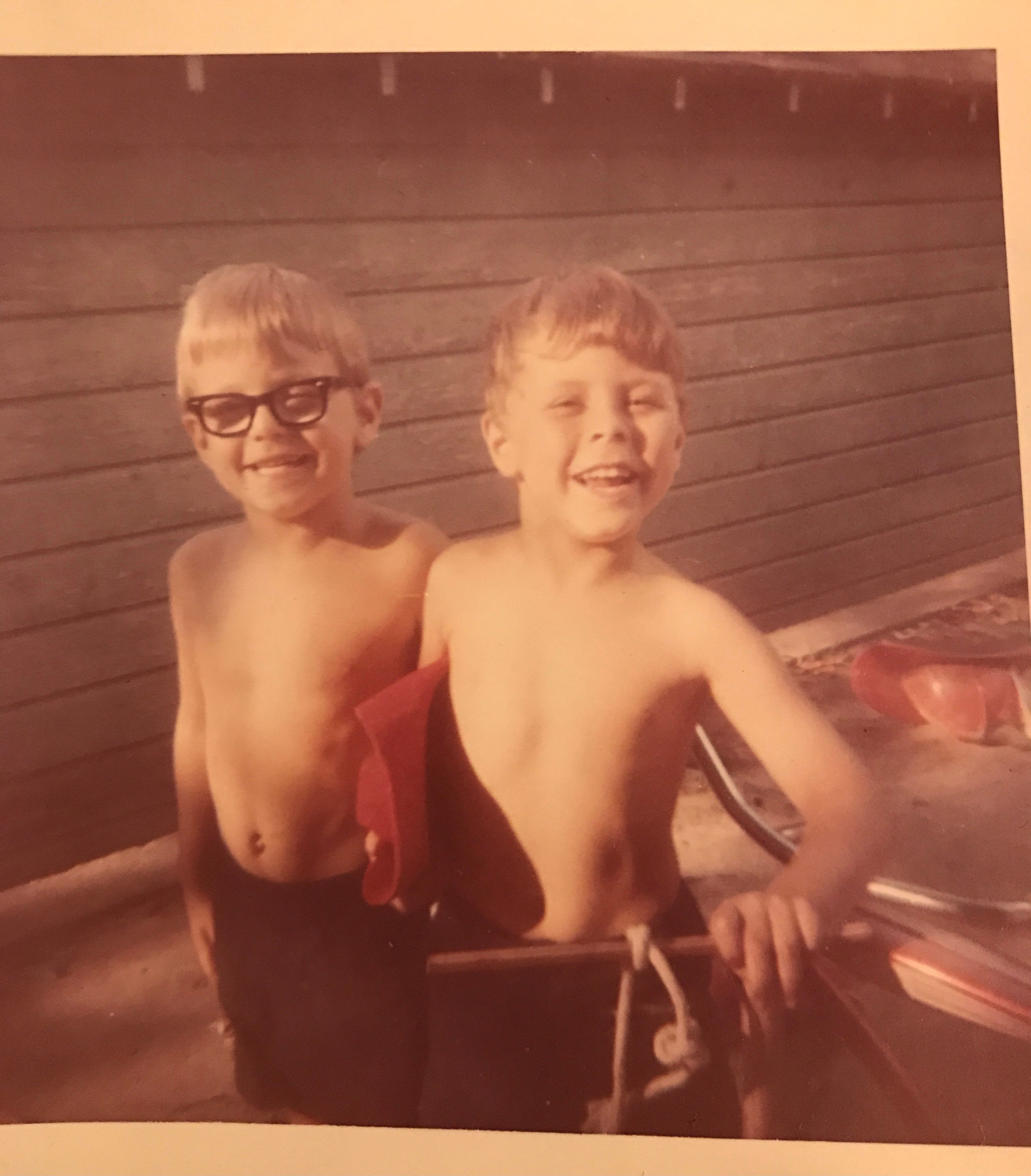
Mom supported Andrew Young in his unsuccessful first bid for Congress in 1970. She planted a campaign sign in our all-white neighborhood, a wooden placard that was three times vandalized and replaced. He would win in 1972, beginning a legacy that helped shape ATL into the multicultural mecca it now is.
At EOA, Mom wrote radio spots and created programs like Rent-A-Kid, wrote and edited copy for brochures and pamphlets, and went into black communities to engage citizens. Once in a while, she would take Britt and me.
Perry Homes was an Atlanta housing project. A tornado swept through one night, and did serious damage. All was darkness. McDonald’s donated a couple hundred cheeseburgers, and Mom and some EOA co-workers drove through the pitch-blackness with Britt and me in the bed of a truck, five and six years old, handing out burgers to residents huddled around trashcan fires. They were baffled and grateful. Like a lot of my childhood, it was both scary and fun. My brother remembers a man insisting on showing us his knife wound. In the glow of flashlights and cigarette ash, Mom was full of energy, unafraid, and all smiles.
One summer Sunday we went to a black church somewhere in Atlanta. Despite the sweltering heat, everyone was in their Sunday best, which mostly consisted of dark wool suits for the men, and immaculate, long dresses for the women. Even the kids were dressed up. My mom, brother, and I were the only white people there, and we had no Sunday clothes. Mom had some business with a young preacher, who strode out in long black wool robes and commenced testifying to much response from the crowd, who yelled and hooted and sang. This both exhilarated and frightened me.
I can still conjure the potpourri of sweat-soaked fabric, hair oil, and aggressively soap-scrubbed hands, wafting in waves, buffeted by fans in the hands of every congregant. Each fan – a piece of cardboard on a popsicle stick – featured a trinity of faces: MLK at the top, flanked below by Robert Kennedy and John Kennedy, each with their famous sayings below their portraits. We took one of these home, and the three figures would look back at me from the kitchen wall for years afterward. I would memorize the snippet from each man’s speech, RFK’s being my favorite: “Some people look at things as they are and ask, ‘Why?’ I dream things that never were and ask ‘Why not?’” (MLK’s was from the “I Have A Dream” speech and JFK’s was “Ask not what your country can do for you, etc.…”)
I’d never seen a preacher so worked up. He worked the pulpit like a rock star, sweat pouring down his face. In the middle of saying something about the Lamb of God, he collapsed with a clatter and boom on the wide floorboards. The room gasped and fell silent. Two men hurried over, ready with smelling salts, which they waved under his nose. He rose, drew a ragged breath, waved off his minders, and launched right back into his sermon. The church fell in with him, like nothing had happened. His passing out seemed a regular occurrence.
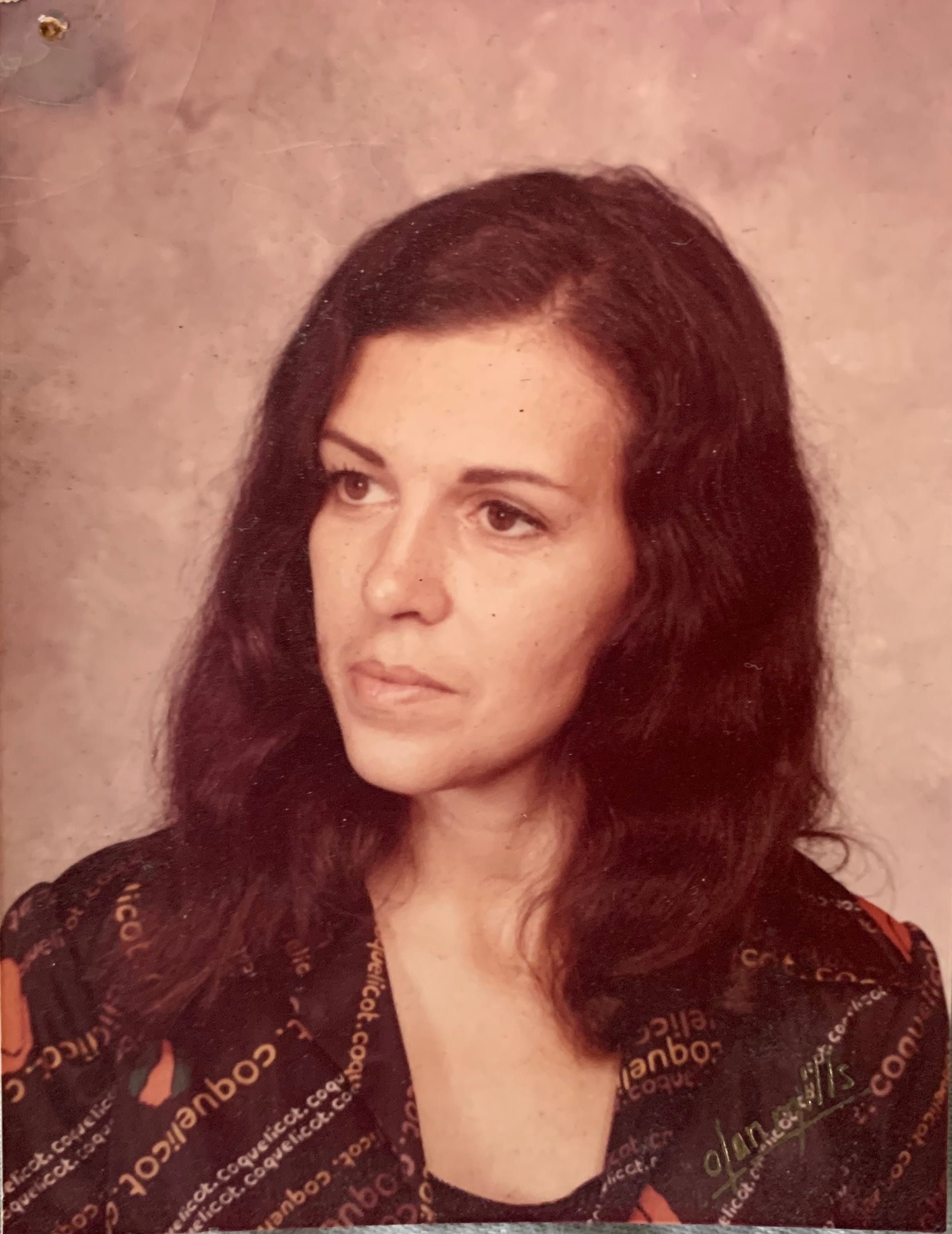
Every summer, Mom took us to the Piedmont Arts Festival, in Atlanta’s Piedmont Park. Britt and I roamed barefoot and free in clouds of patchouli, incense, and pot smoke; we wandered in and out of stalls where young, scraggly, fragrant merchants sold leather goods, tie-dye, head shop items, and art in all manner of media; musicians played on stages and among the people, singing their anthems and laments while Hare Krishnas jingle-jangled along the winding paths. Grilled meat, spilled beer, oiled skin, stinky feet, cigarettes: all hung in the thick, hot air.
It was the waning days of hippie-dom, but you wouldn’t have known it. It seemed like the heyday. The willed embrace of chaos so favored by the counterculture often scared me, but at the Piedmont Arts Fest, I successfully tapped into mom’s contagious fearlessness. My brother and I were quick enough to elude pursuers, ready to climb to the upper boughs of a tree or to burrow beneath a gewgaw-strewn table if need be. We were hippie-kid outlaws, half-pint tricksters who could wreak mischief and vanish into the melee at will. We had fun.
Mom would catch up with us by evening, when sweat trickled onto my eyeglass lens, the salty drops skewing and refracting the soft lamplight, transforming it into a private vision of will o’ the wisps dancing above the exhaling park, my own little lightshow across the scuffed lenses of my glasses. In the homebound VW, Britt and I, filthy, scuffed, and happy, would crumple into each other and fall asleep as the streetlights passed overhead, our mother puffing on a cigarette, humming along to the radio, tipping ashes into the cool of the evening. Ready for anything.
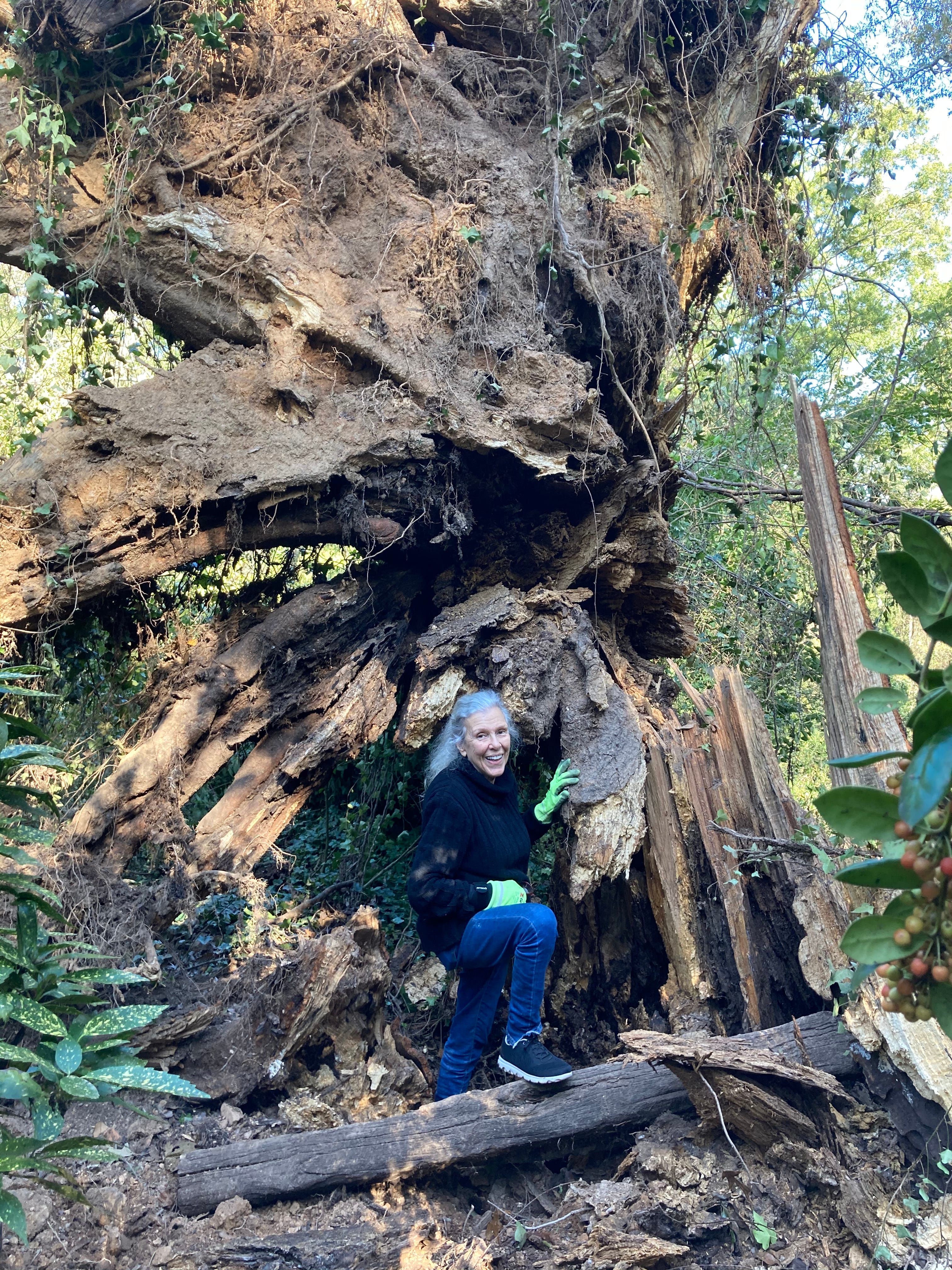
You are her son
great writin' and photos!!! thanks!